
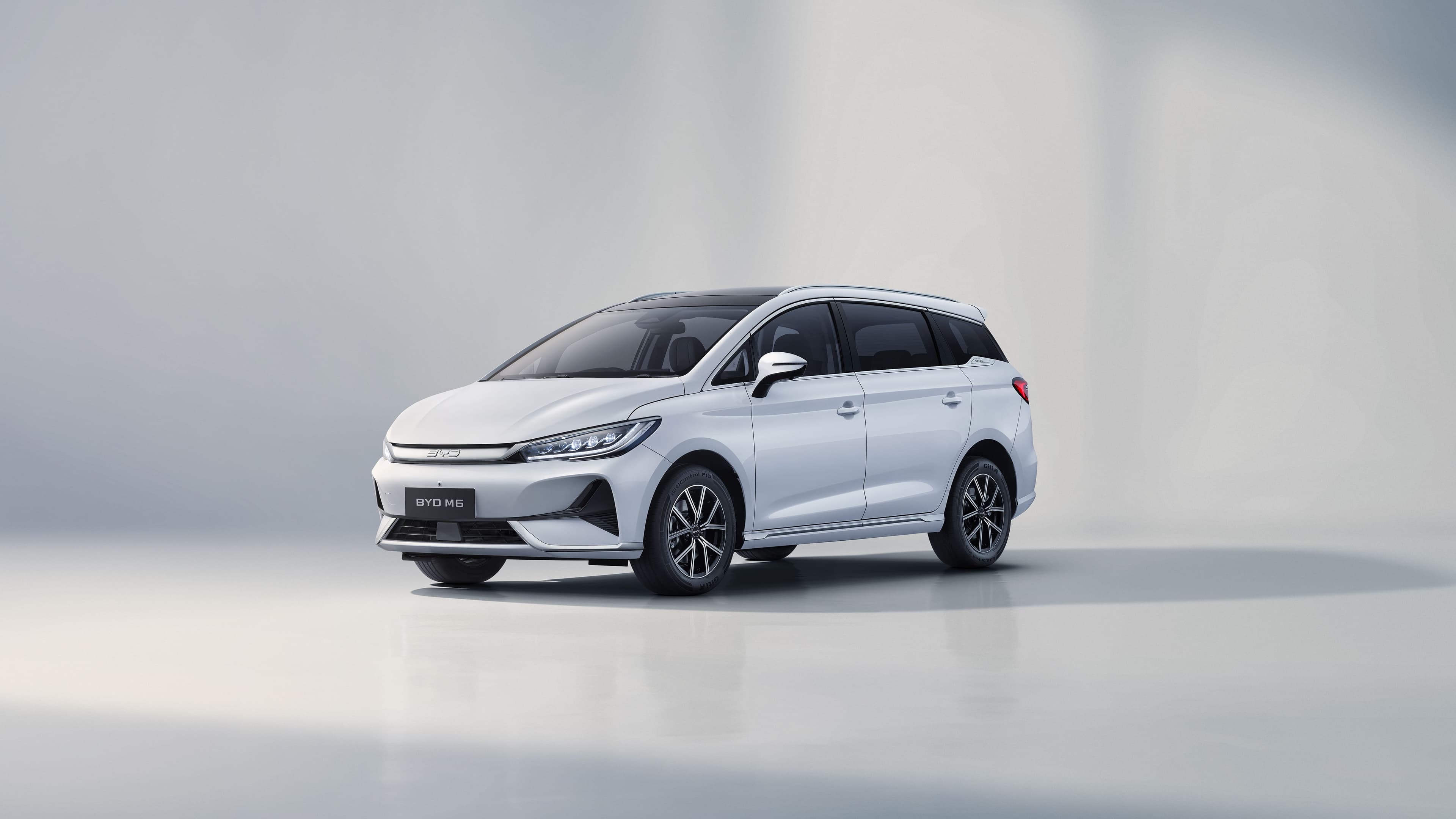
Comparing BYD EV Models: Which One Fits You?
Compare BYD EV models side-by-side and pick the best fit for your budget, space, range needs, and charging setup.
BYD Editorial
Buying Guides
If you're shopping BYD EVs from the US, you'll run into one big problem fast: specs, trims, and even model names can vary a lot by country (and US availability is different from most markets). So instead of pretending there's one "official" answer, this guide does what you actually need at decision time:
- compares BYD's most talked-about global models using consistent buyer criteria
- shows who each model fits best
- flags the trade-offs that matter more than marketing numbers
⚠️ Warning
Range and charging figures are often quoted in WLTP or CLTC testing cycles (not EPA). Treat any single number as a starting point, then verify the exact spec sheet for your market and model year.
Quick comparison: BYD EV models at a glance
| Model | Body type | Best for | Why you'd pick it | Trade-offs to watch |
|---|---|---|---|---|
| Seagull | City hatch | Cheapest city EV | Simple, small, ultra-urban | Tight space; highway/road-trip limits |
| Dolphin | Compact hatch | Daily commuting + value | Practical size, strong feature-per-dollar | Not an SUV; cargo is "enough," not huge |
| Atto 3 / Yuan Plus | Compact SUV | One-car household | SUV stance + family practicality | Not as large as mid-size SUVs |
| Seal | Sedan | Long commute / highway comfort | Sleek sedan with "Model 3 competitor" vibes | Less cargo flexibility than SUVs |
| Seal U / Song Plus | Mid-size SUV | Family space + comfort | More room, more road-trip comfort | Model/trim naming varies; check details |
| Han | Large sedan | Premium feel without SUV size | Flagship sedan comfort and power | Big-car footprint; price climbs fast |
| Tang | Large SUV | Space-first buyers | SUV room (often 3-row focus in some markets) | Size + cost; efficiency varies by spec |
Want to see more models beyond these? Start at the hub for the full BYD EV lineup.
Quick picks: which BYD should you choose?
Use this section as your "shortlist builder." You can decide in under 2 minutes.
- You mostly drive in town and want the lowest entry price → Seagull
- You want a compact EV that feels like a normal car (easy parking, easy life) → Dolphin
- You want one vehicle that can do school runs, Costco trips, and weekend driving → Atto 3 / Yuan Plus
- You prefer a sedan and care about highway stability and efficiency → Seal
- You want an SUV with more rear-seat and cargo comfort than a compact crossover → Seal U / Song Plus
- You want a premium, bigger sedan with flagship vibes → Han
- You want the most space in the range and SUV practicality is non-negotiable → Tang
BYD EV models: how to compare them (the criteria that actually decide the purchase)
1) Size and practicality (your real day-to-day)
This is where buyers make mistakes. A model can have "great specs" and still be wrong for your life.
Ask yourself:
- Do you need easy parking (city life) or rear-seat comfort (adults/kids)?
- Do you carry strollers, sports gear, or big grocery loads?
- Do you want a hatch/SUV opening or is a sedan trunk fine?
Quick rule of thumb:
- If you're mostly city driving and convenience matters, a hatch (Seagull/Dolphin) is hard to beat.
- If you're doing family logistics, an SUV (Atto 3 or Seal U/Song Plus) usually reduces friction more than any range number ever will.
2) Range numbers (and why test cycles matter)
Range is important—but it's also easy to misunderstand.
- WLTP (common in Europe) tends to read higher than what many drivers see at US-style highway speeds.
- CLTC (common in China) can look even more optimistic.
- EPA (used in the US) is often treated as more conservative.
So when you see a range claim, don't just ask "what's the number?" Ask:
- Which test cycle is it?
- What's the battery size and wheel/tire option? (those can move range meaningfully)
- What's your worst-case day? (cold weather, highway, full cabin)
For a grounded explanation of why official range and real-world range can diverge, see how reviewers frame testing and consumption differences in practice (for example, Edmunds' "EPA vs tested range" reporting, when accessible).
3) Charging: what matters more than peak kW
Most people don't live on a DC fast charger. Your "charging experience" is really:
- Home charging speed (or lack of home charging)
- How often you fast-charge
- How reliable your usual charging locations are
A few practical checks:
- If you can charge at home (garage/driveway), you can live happily with "okay" fast-charging.
- If you're apartment charging or rely on public infrastructure, the easiest car to own is often the one with the best charging plan, not the biggest battery.
When you compare models, look for:
- realistic 10–80% times (and what power level they assume)
- AC charging support (especially if you mostly charge overnight)
4) Performance: don't buy horsepower you'll never use
You don't need sports-car acceleration to love an EV. What you do want:
- confident merging
- stable highway passing
- predictable traction in bad weather
Best fit guidance:
- City-first drivers usually won't notice the difference between "quick" and "very quick."
- If you regularly drive fast highways or carry full loads, a larger model (Seal U/Song Plus, Tang) can feel calmer simply because it's heavier and longer—not because it's faster.
5) Battery safety and longevity (BYD Blade Battery, explained simply)
BYD's battery story matters because it's one of the brand's most repeated differentiators.
BYD says its Blade Battery uses lithium iron phosphate (LFP) chemistry and a "cell-to-pack" design to improve space efficiency and safety. In BYD's own explainer, the Blade Battery is positioned around thermal stability, durability, and structure (see BYD's Blade Battery overview).
A common reference point in battery safety discussions is the nail penetration test, which is meant to simulate an internal short under severe abuse. BatteryDesign's summary notes BYD has demonstrated low surface temperatures (30–60°C) in a Blade cell nail test—but also cautions that results can vary by method and conditions (see BatteryDesign's nail penetration overview).
What this means for you as a buyer:
- LFP packs are often valued for durability and stability.
- Don't treat one viral test as "proof," but it's fair to say BYD is investing heavily in battery safety positioning.
- If you plan to keep the car for a long time, battery chemistry and warranty terms matter as much as range.
6) Tech and driver assistance: focus on the features you'll use weekly
Ignore the spec-sheet flexing and zoom in on your routine.
- If you road-trip: adaptive cruise + lane-keeping quality matters.
- If you park in tight spaces: 360° camera matters.
- If you hate fiddly UIs: infotainment and phone integration matters.
Don't overpay for "everything." Pick what reduces stress.
7) Ownership reality: warranty, service, and parts
This is the decision-stage section many comparisons skip.
If you're in the US looking at BYD models as a global shopper, you should treat service access and parts as first-class criteria.
Two practical moves:
- Look up model documentation and ownership resources early (start with BYD owner's manuals). It's a quick way to sanity-check features, safety notes, and trim differences.
- If you're considering an import/used route, read a market-focused guide first to understand what varies (see the site's used BYD buying guide).
Model-by-model: what each BYD is best at (and what to watch)
BYD Seagull
Best for: city-only drivers who want the simplest, cheapest EV footprint.
For a quick spec snapshot, see the BYD Seagull specs.
Watch-outs:
- You're buying a city tool, not a road-trip machine.
- Space and comfort trade-offs show up fast if you carry passengers often.
BYD Dolphin
Best for: value-focused buyers who want a "normal" compact EV that's easy to live with.
This is also where most people end up doing the classic BYD Dolphin vs Atto 3 comparison: hatchback simplicity versus small-SUV convenience.
If you want the brand's stated highlights and specs in one place, start with the BYD Dolphin specs.
Watch-outs:
- If you routinely haul bulky cargo, a compact SUV will feel easier.
BYD Atto 3 / Yuan Plus
Best for: the broadest set of buyers—especially if this is your first EV and you want an SUV shape.
For a quick spec snapshot, see the BYD Atto 3 specs.
Watch-outs:
- If you need "real" mid-size SUV space, you may outgrow it.
BYD Seal
Best for: sedan people—drivers who want a low, stable feel and a sleeker highway ride.
For a quick spec snapshot, see the BYD Seal specs.
Watch-outs:
- Sedans are less flexible than SUVs for strollers, pets, and tall cargo.
BYD Seal U / Song Plus
Best for: buyers who want SUV comfort and cargo flexibility without going full-size—often the sweet spot if you're browsing BYD electric SUV models.
For a quick spec snapshot, see the BYD Song Plus EV specs.
Watch-outs:
- Naming and trims can be confusing across markets; confirm whether you're looking at Seal U EV vs DM-i (PHEV) variants where relevant.
BYD Han
Best for: shoppers who want a flagship sedan experience (quiet cabin, premium feel, power).
For a quick spec snapshot, see the BYD Han specs.
If you're cross-shopping sedans, the practical question is BYD Seal vs Han: do you want the sportier mid-size feel (Seal) or the more executive, bigger-car vibe (Han)?
Watch-outs:
- Bigger cars are easier to love on highways—but harder to park, insure, and justify if you mainly do short trips.
BYD Tang
Best for: space-first households that want the "big SUV" posture and practicality.
For a quick spec snapshot, see the BYD Tang specs.
Watch-outs:
- With bigger SUVs, everything tends to get more expensive: tires, energy use, and sometimes insurance.
FAQ: last-mile questions to answer before you commit
Are BYD models available in the US?
Availability is different from many global markets. Treat this guide as a model-fit framework, then confirm local sales, certification, service, and import considerations where you live.
Should I compare WLTP/CLTC range directly to EPA range?
Not directly. Use them as directional, then look for market-specific tests and your own driving conditions.
Is the Blade Battery "safer"?
LFP chemistry is generally associated with stability, and BYD positions the Blade Battery heavily around safety testing. Still, safety is a system outcome (cell + pack + vehicle structure), and testing methods vary.
What if I can't charge at home?
Make your charging plan first. In many cases, the "best model" becomes the one that fits your routine and charging access—not the one with the biggest battery.
Next steps
If you want the cleanest decision process, do this in order:
- Pick two models that fit your lifestyle (not your ego).
- Verify the exact trim/spec sheet for your market and year.
- Confirm charging plan + service plan before you fall in love with a feature list.
- Contact us for a great solution.
Related Articles
.png&w=828&q=75)
Which BYD EV Has Best Cargo Space For Latin American Families? 2026 Review
Compare trunk dimensions & real loading test feedback of popular BYD EVs sold in Latin America, match models to your family storage needs.
.png&w=828&q=75)
BYD Sealion vs Dolphin 2026: Budget EV Comparison & Buyer Guide
Compare BYD Sealion and Dolphin 2026 on price, range, space and owner reviews, pick the EV matching your budget and travel demands.
