
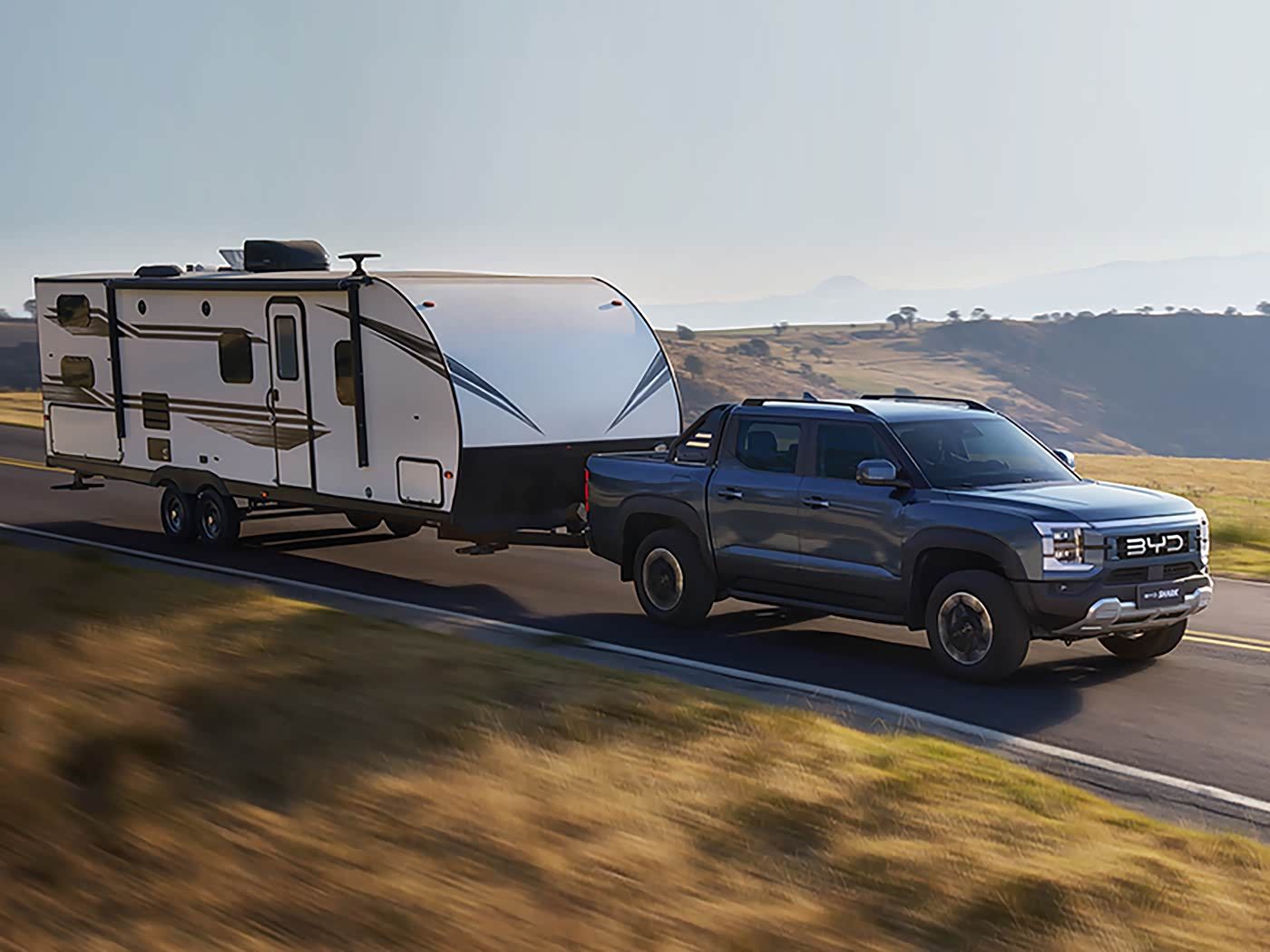
2026 BYD Shark Interior: 30 Features You Should Know Before Buying
Is the BYD Shark 6 cabin really luxury-SUV quality? We dissect materials, 15.6" rotating screen, seats, V2L & HUD and compare it to Ford Ranger PHEV & GWM Cannon Alpha.
EVtoU Team
Editorial
$30,000 or $60,000? That is the question the BYD Shark 6 forces reviewers to ask — because its interior quality is so far ahead of the price tag that the usual rules of the dual-cab ute market no longer apply. After spending time with all three 2026 variants — Dynamic, Premium and Performance — we dissect the materials, the tech, the seats and the headline-grabbing V2L power system to find out whether the Shark 6 cabin is genuinely class-leading, or just clever marketing.
First Impression: A Ute Cabin That Feels Like a Luxury SUV
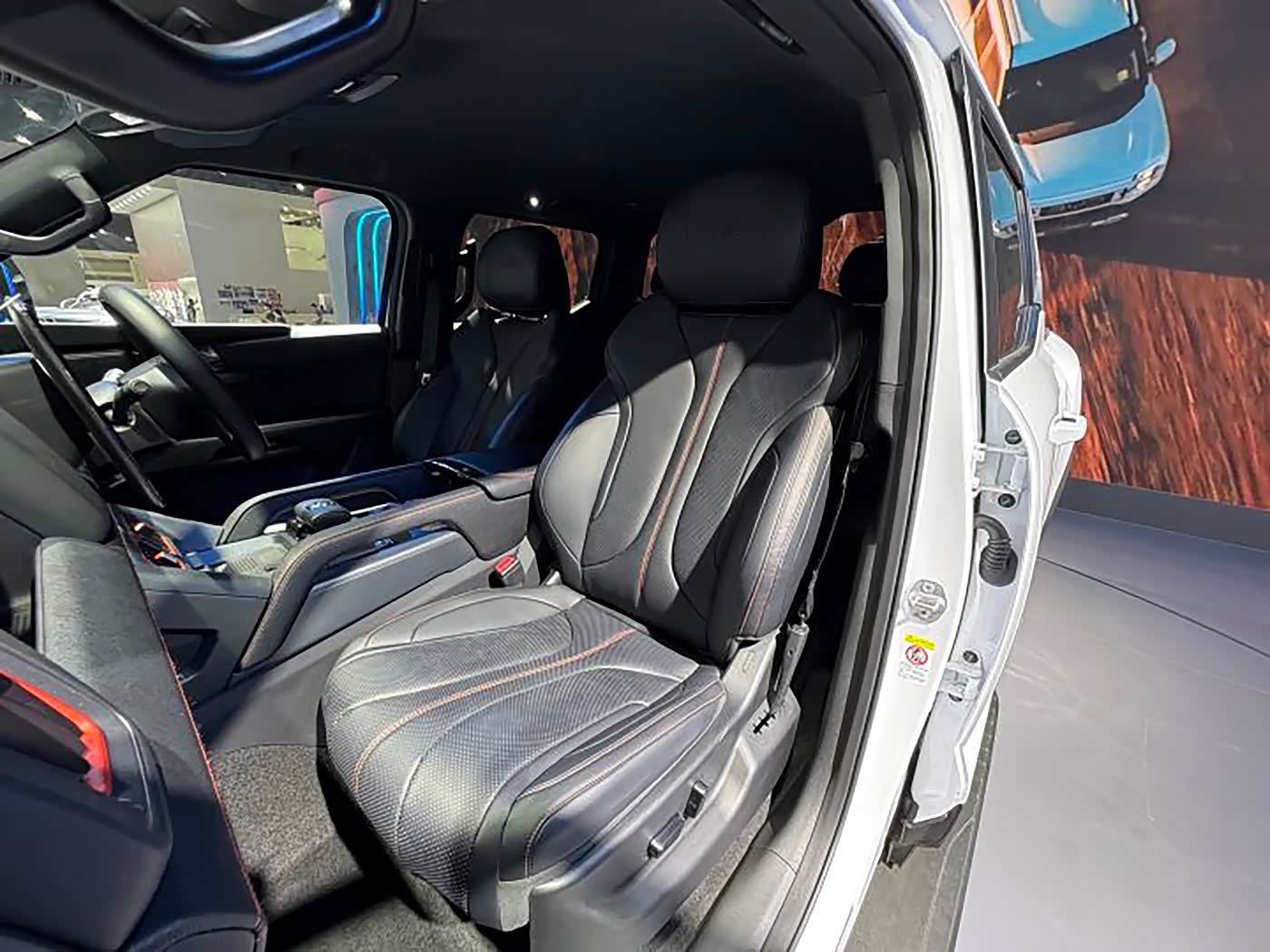
Slide into the Shark 6 for the first time and the immediate impression is that you have stepped into something closer to a luxury SUV than a work-grade ute. The cabin is quiet, the materials feel considered, and the overall ambience is several rungs above what you expect at this price point.
CarsGuide summed it up bluntly: "You're essentially buying into a luxury SUV these days more than a dual-cab ute." TruckSales went further, calling the Premium trim "anything but budget" despite the low entry price. Drive noted that the doors close with a reassuring thud — a small detail that signals solid build quality the moment you enter.
"The Shark 6 pushes the standard so far forward that legacy rivals had better up their game." — Carscoops, on the BYD Shark 6 cabin
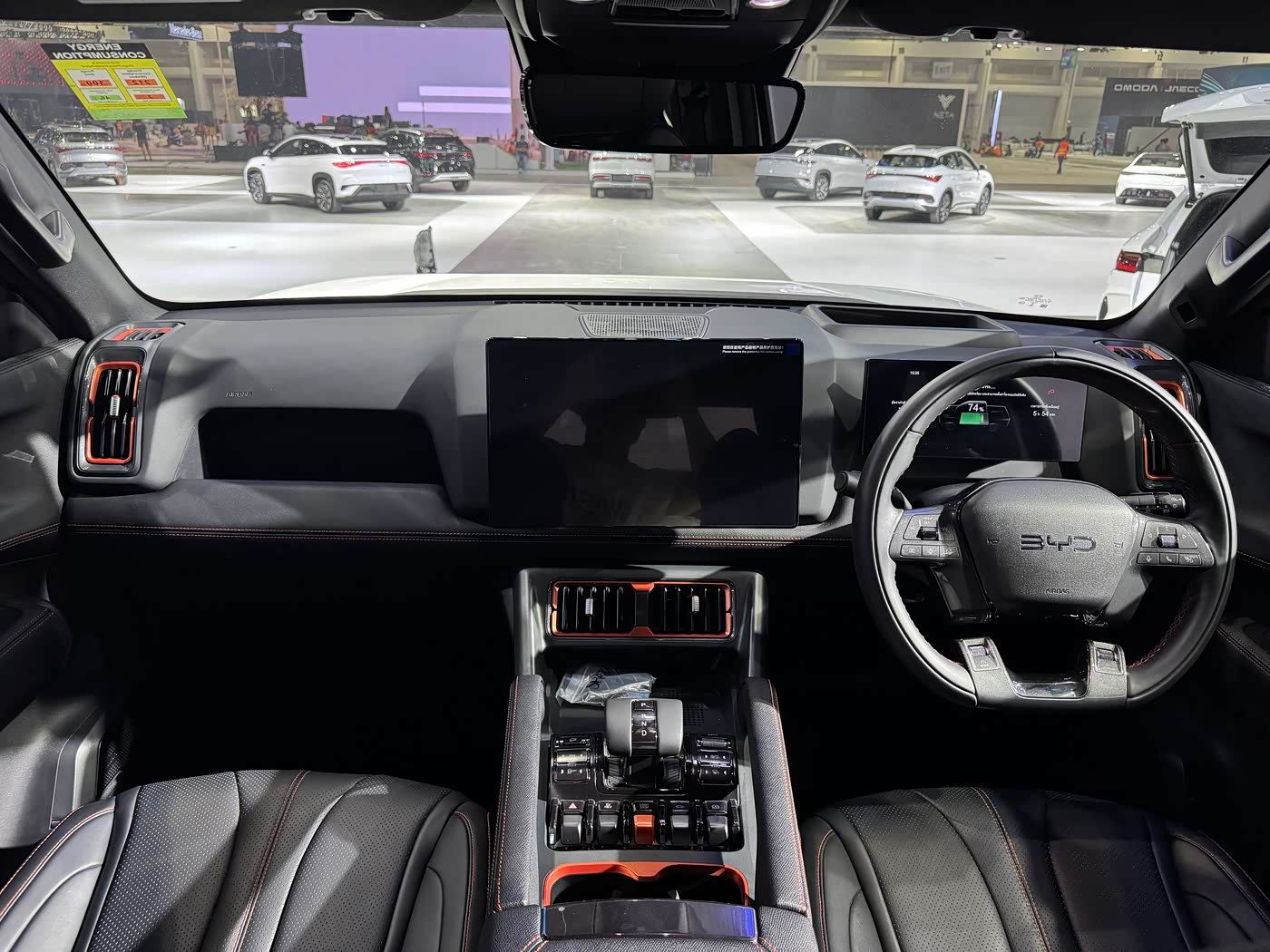
What strikes you first is the colour and trim. The dominant theme is black synthetic leather with orange accent stitching across the dashboard, seats and vents — a sporty, fighter-jet inspired look that gives the cabin a distinct personality. Build quality is generally solid, though some early owners on Australian forums have reported minor cabin creaks developing over time, and panel gaps — while consistent — are not quite at Toyota HiLux levels.
For a vehicle that starts at AUD $55,900 before on-road costs, the first impression is genuinely impressive. The question is whether that impression holds up under closer inspection.
Looking for BYD Shark 6 pricing in your market?
Contact our export team for a personalised quote including shipping, import duties and compliance for your region.
Materials & Craftsmanship: Where BYD Spent the Money
This is where the Shark 6 gets interesting. Instead of the cheap, scratchy plastics that still dominate the dual-cab segment, BYD has clearly invested in the touch points that matter most to buyers.
Soft-Touch Where It Counts
The dashboard top pad is a soft-touch material — not the plush, padded surface you would find in a Mercedes X-Class, but a noticeable step up from the hard plastics in a Hilux WorkMate or Ranger XL. The mid-bolster section that runs left-to-right across the cabin is where BYD concentrated its budget: it is wrapped, stitched and feels genuinely premium to the touch.
Door panels follow the same philosophy. The upper sections are soft-touch with stitched detailing, and the armrest areas use the same synthetic leather as the seats. It is not real hide, but the perforation pattern and twin-needle stitching give a convincing impression of quality.
The Aircraft-Style Toggle Switches
Around the gear selector, BYD fitted a row of chunky, aircraft-style toggle switches for hazard lights, EV/HEV mode, auto hold, hill descent control and the 360-degree camera. These are painted, high-gloss units with etched symbols that illuminate at night. They feel substantial and gloved-hand operable — a genuine plus for tradies.
Drive's reviewer made the same observation we did: "The centre console has a funky, symmetrical design with chunky, gloved-hand operable switches." These tactile controls are one of the Shark 6's strongest differentiators versus touchscreen-only rivals.
Where BYD Saved (Honest Assessment)
To keep the price competitive, BYD made some deliberate compromises:
- Centre armrest has no physical latch. It relies on hinge tension alone. Fine for everyday use, but a proper lock would feel more reassuring.
- Some interior plastics in low-touch areas (lower dash, behind seats) are basic grade. You will not notice them unless you go looking.
- Performance trim loses the rotating screen and switches to a column-mounted gear selector — a love-it-or-hate-it change that has divided owners online.
Tech & Infotainment: A 15.6-Inch Rotating Screen Leads the Segment
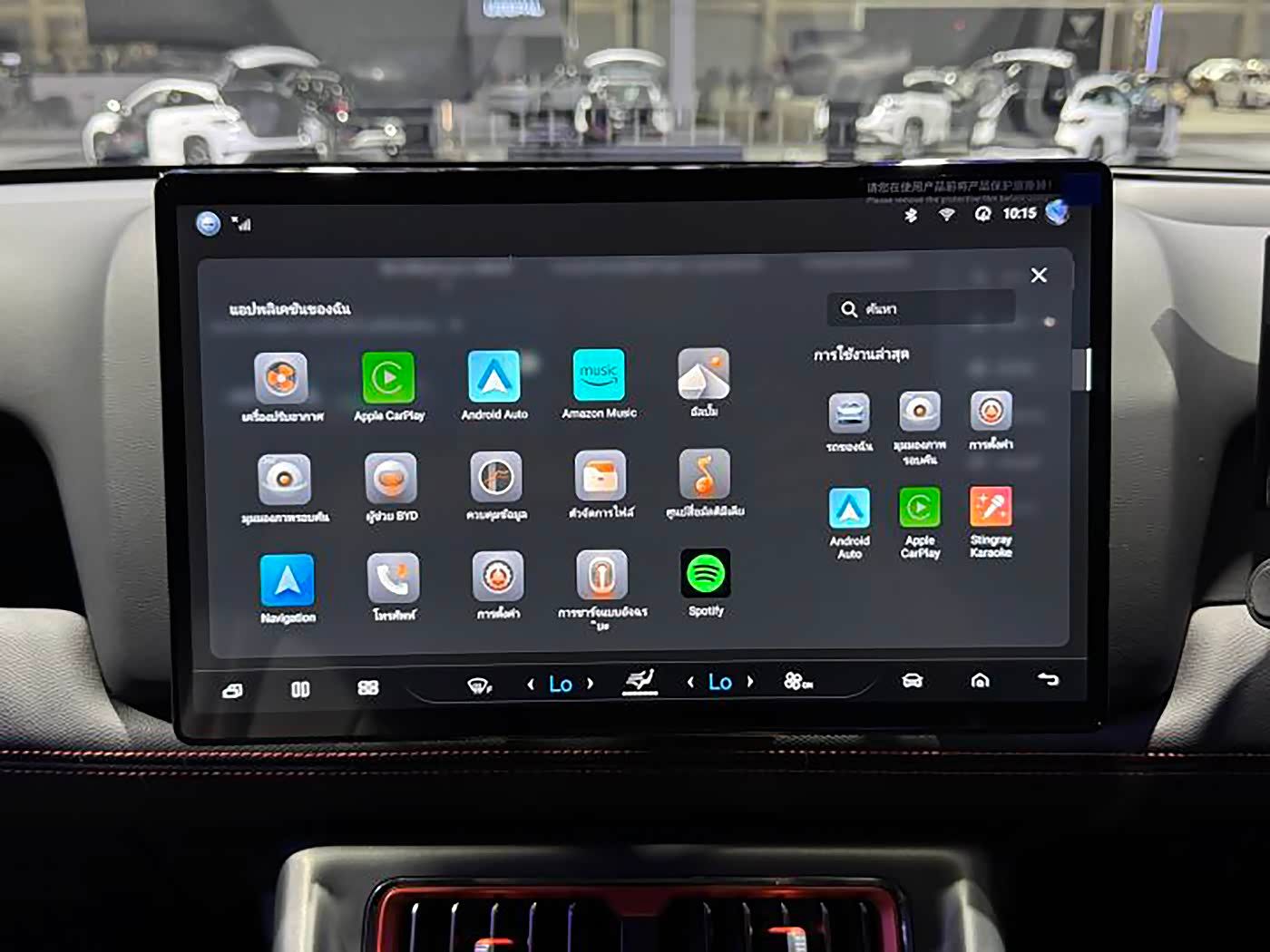
If there is one feature that defines the Shark 6 cabin, it is the infotainment system. The Premium and Performance trims ship with a 15.6-inch rotating touchscreen — the largest in the dual-cab ute class — that flips between landscape and portrait orientation at the press of a button.
The Rotating Screen: Gimmick or Game-Changer?
In landscape mode, the screen is perfect for Apple CarPlay, Android Auto and split-screen multitasking. Rotate it to portrait and you get a tall, scrollable view ideal for navigation, settings menus and — yes — the built-in karaoke app (a quirky BYD party piece that families love at school pickup).
CarsSales noted: "The 2025 BYD Shark 6 Premium takes the cake with its oversized 15.6-inch swivelling display." Drive called the system "exceptionally responsive" with no dropouts during testing. The Dynamic trim makes do with a 12.8-inch fixed screen — still large by segment standards and equally quick, just without the rotating party trick.
Wireless CarPlay, Android Auto & Google Built-In
All three variants come with wireless Apple CarPlay and Android Auto as standard. The Performance trim adds Google Automotive Services built into the hardware — meaning Google Maps, Google Assistant ("Hey Google") and the Google Play Store run natively without needing a phone connection.
During our testing, wireless CarPlay remained stable over hundreds of kilometres with no dropouts — a common pain point on other brands. The 12-speaker Dynaudio premium audio system (standard on Premium and Performance) delivers crisp, well-balanced sound that easily outclasses the 6-speaker systems found in most base-model rivals.
Voice Control: "Hi BYD"
Wake the system with "Hi BYD" (or "Hey Google" on Performance) and you can adjust climate, change volume, set navigation, switch drive modes and more — all without lifting a finger from the wheel. It is not perfect (accents can confuse it), but for a ute at this price it is a genuinely useful feature.
Head-Up Display & Digital Cluster
Premium and Performance trims get a W-HUD head-up display that projects speed, navigation arrows, cruise control status and lane-assist warnings onto the windscreen. Height, brightness, colour and content are all adjustable. Reviewers have noted the HUD unit itself is on the large side — it drops down from the top of the dashboard rather than integrating flush — but the information it provides is clear and useful.
The 10.25-inch digital instrument cluster behind the wheel displays speed, range, battery state of charge, drive mode and ADAS status. Our only gripe: the icons are small, and the font size could be larger for drivers with less-than-perfect vision.
360-Degree Camera & Parking
A 360-degree camera system with 3D and 2D views, transparent-chassis mode and dedicated wheel-close-ups is standard across the range. Combined with front and rear parking sensors, it makes squeezing this 5.4-metre ute into tight car parks far less stressful than it should be.
Tradies & Fleet Buyers
Ask us about volume pricing, LHD/RHD configuration and accessories for the BYD Shark 6. We supply single-vehicle buyers and fleet orders worldwide.
Seats & Comfort: Supportive, Well-Equipped, Family-Ready
Front Seats: Heating, Ventilation & 8-Way Power
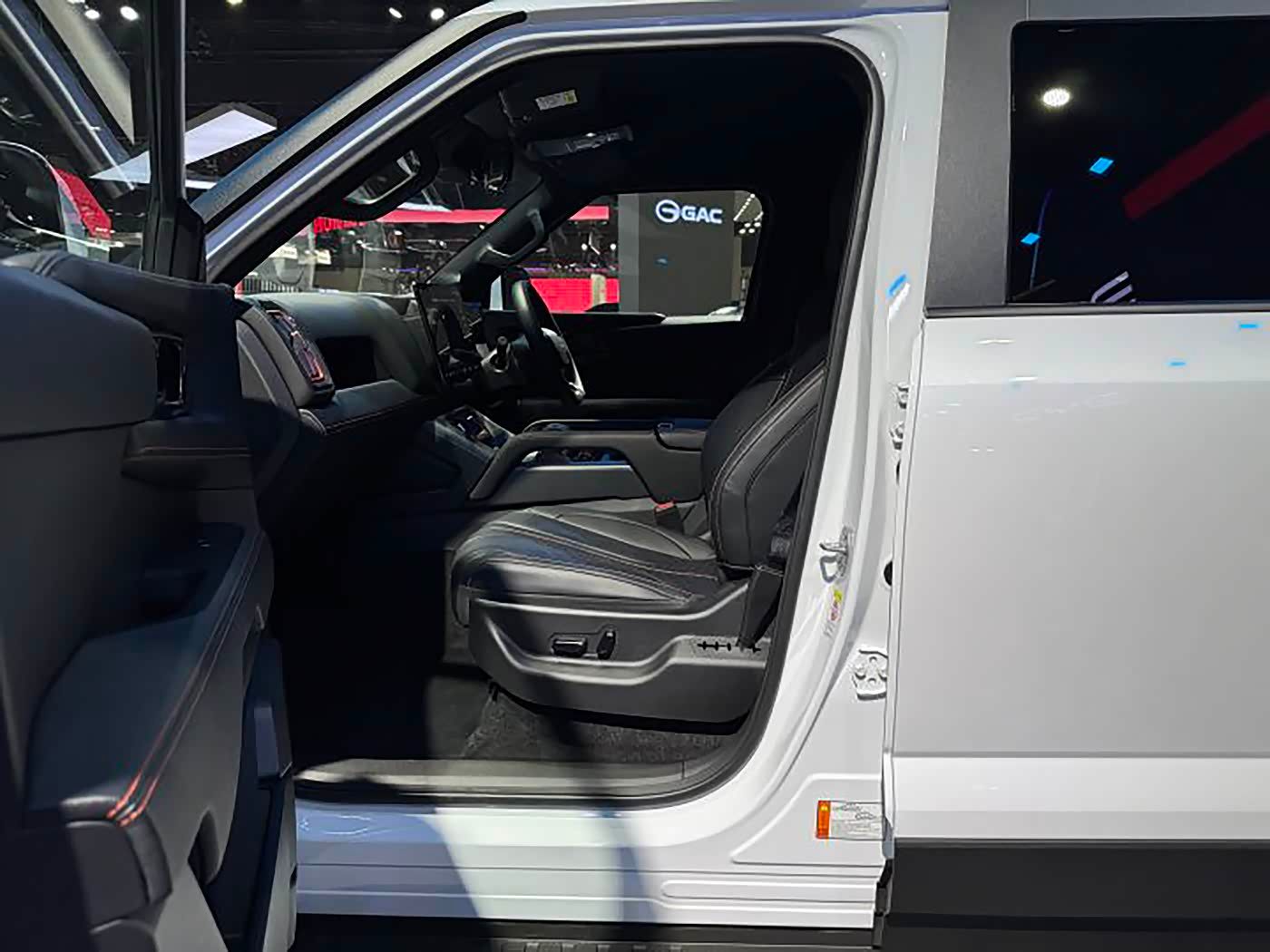
The front seats are a standout. Thickly padded, broadly supportive and trimmed in black synthetic leather with orange stitching, they offer 8-way power adjustment for the driver (including 4-way lumbar support) and 4-way power for the passenger on Premium and Performance. The Dynamic gets 6-way power without lumbar.
Heating and ventilation are standard on Premium and Performance — a rarity in this price bracket. Drive's reviewer noted: "Having heating and ventilation is a massive bonus… that black synthetic leather is going to be stone cold in the mornings, and in summer the last thing you want is sweaty thighs."
The seats are on the firm side, which translates to good long-distance support. Our only criticism: the side bolsters could be more pronounced. During spirited driving, you may find yourself sliding slightly in the seat — a minor point, but worth noting for enthusiastic drivers.
Rear Seats: The Flat-Floor Advantage
Here is where the Shark 6's PHEV architecture pays a huge dividend. Because there is no mechanical link (no driveshaft, no transmission tunnel) running between the front and rear axles, the rear floor is completely flat. The middle passenger gets a genuinely usable footwell — something no diesel ute in this class can match.
"There is the obvious bonus of not having a transmission tunnel running up the length of the floor. My feet slide under the seat, and when my knees do touch the seat in front, it's met with a soft back." — Drive Australia, on the Shark 6 rear seat
The rear seat backrest is angled slightly rearward — not bolt-upright like a church pew — which makes a real difference on longer journeys. Headroom is generous, ISOFIX child-seat anchors are present, and the middle seat gets a three-point seatbelt. For families shopping in this segment, the Shark 6 rear cabin is genuinely class-leading.
Steering Wheel & Driving Position
The steering wheel offers a good range of reach and rake adjustment. On Premium it is trimmed in genuine leather; on Performance it switches to synthetic leather (a curious downgrade); on Dynamic it is also synthetic. Two driving-mode dials at the bottom of the wheel — one for on-road modes (Eco/Normal/Sport), one for off-road terrain (Mud/Sand/Snow/Mountain) — are intuitive and keep your hands on the wheel.
Practical Features for Work & Play: V2L, Charging & Storage
V2L: A Mobile Power Station
If there is a single feature that sets the Shark 6 apart from every diesel ute on the market, it is Vehicle-to-Load (V2L). The Shark 6 comes from the factory with four 230V household-style power outlets — three in the tub (under a weatherproof flap on the driver's side) and one inside the cabin behind the front seats.
Combined V2L output is up to 6.6 kW from the tub outlets and 2.2 kW from the cabin outlet. That is enough to:
- Charge power-tool batteries on a remote worksite
- Run corded tools (drills, grinders, small circular saws)
- Power a campsite (lights, induction cooktop, coffee machine, fridge)
- Charge camera batteries, drones and laptops
- Provide emergency backup power to a home during a blackout
The petrol engine can be set to auto-start when the battery state of charge drops below a user-defined threshold, meaning you can keep powering devices indefinitely on a worksite or campsite. OzCanopies, a well-regarded Australian accessories firm, confirmed in their testing: "Factory V2L gives the Shark 6 a massive head start over any diesel ute. No generator needed on site."
"The BYD Shark 6 is not just another ute with a 12V cigarette lighter. It has four 230V outlets from the factory. That is a game-changer for tradies and campers." — OzCanopies, V2L Power Guide
Charging & Range
The Shark 6 uses a 29.58 kWh BYD Blade Battery (LFP chemistry — the safest lithium chemistry available). AC charging is via a Type 2 port at up to 7 kW; DC fast charging uses CCS2 at up to 55 kW, taking the battery from 30% to 80% in around 25 minutes.
Real-world electric range is approximately 80 km (WLTP) — enough for most daily commutes and school runs. Combined range with a full tank of petrol is around 800 km (NEDC), or approximately 700 km in real-world mixed driving. Official fuel consumption is a claimed 2.0 L/100 km when the battery is above 25% charge; real-world testing by CarAdvice returned 6.8–8.9 L/100 km depending on conditions.
Storage, Cupholders & Charging Ports
- 50W wireless phone charger with active cooling (under the centre console)
- USB-C + USB-A ports front and rear (four total)
- 12V accessory socket in the centre console
- Deep centre console bin with room for large items
- Front door bins that accommodate 1L bottles
- Rear door storage and seat-back pockets
- Open cubby in front of the passenger (deep enough for a phone/wallet)
Value Proposition & Pricing: Three Trims, One Clear Winner
The 2026 BYD Shark 6 range spans three variants, each targeting a different buyer profile:
| Feature | Dynamic Cab-Chassis | Premium | Performance |
|---|---|---|---|
| Price (before on-road AUD 2026) | $55900 | $57900 | $62900 |
| Infotainment | 12.8" fixed | 15.6" rotating | 15.6" fixed |
| Digital cluster | 10.25" | 10.25" | 10.25" |
| Head-Up Display | — | ✓ | ✓ |
| Audio | 11-spk | 12-spk Dynaudio | 12-spk Dynaudio |
| Heated / ventilated seats | — | ✓ | ✓ |
| Wireless charging | ✓ (50W) | ✓ (50W) | ✓ (50W) |
| 0–100 km/h | 5.7 s | 5.7 s | 5.5 s |
| Steering wheel | Synthetic leather | Genuine leather | Synthetic leather |
| ombined power / torque | 321 kW / 650 Nm | 321 kW / 650 Nm | 350 kW / 700 Nm |
What We'd Change: Gripes & Quirks
No vehicle is perfect, and the Shark 6 is no exception. After extensive time with all three trims, here are the issues that surfaced most consistently — both in our testing and in owner reports across Australian forums.
The Annoyances
- Climate controls buried in the touchscreen. Basic functions like fan speed and temperature require navigating menus or using voice control. There are no dedicated physical knobs for climate — a frustration for tradies with gloved or dirty hands. The three-finger swipe shortcut helps, but it is not intuitive.
- Driver-assist alerts are over-eager. The Driver Monitoring System (DMS) frequently warns about "distracted driving" when you yawn, talk, or wear certain sunglasses. Lane Keep Assist can be jerky on regional roads with faded markings. Most owners end up disabling these features after each start — a process that requires multiple menu taps.
- Instrument cluster font is small. Key information (speed, range) could be displayed more prominently for drivers with less-than-perfect vision.
- Performance trim loses the rotating screen. The column-mounted gear selector frees up console space but creates ergonomic confusion — indicators moved to the opposite stalk, forcing drivers to relearn muscle memory.
- No heated steering wheel on any trim. For a vehicle marketed as a family-friendly ute in markets with cold winters, this is a curious omission.
- Some owners report infotainment glitches. Forum posts mention occasional screen freezes, T-Box (4G connectivity) failures, and OTA updates that temporarily break features. BYD is addressing these via over-the-air updates, but the fixes have not been universally successful.
Known Technical Issues (Owner Reports)
AustralianCar.Reviews has documented several issues affecting early-build Shark 6 vehicles:
- Low-speed off-road torque limitation. On steep, rutted climbs, the electric motors can "stall" without a traditional low-range transfer case. The new Performance trim's two-speed rear transmission and Crawl Mode largely solve this.
- CV joint failures in sand/off-road use. Some owners reported front driveshaft issues under high torque + suspension articulation. Avoid full-lock turns under heavy throttle.
- 12V battery parasitic drain. The always-on 4G/cloud features can deplete the 12V battery if the vehicle is left unused for extended periods. A higher-quality AGM battery helps.
BYD Australia has been proactive with recalls and software updates, and most issues are covered under warranty. But buyers should be aware that the Shark 6 is a first-generation vehicle with the teething problems that implies.
Verdict: Is the Shark 6 Cabin Worth the Money?
The answer is an emphatic yes — with one important caveat about which trim you choose.
For $57,900, the Shark 6 Premium delivers a cabin that genuinely rivals vehicles costing $70,000 and above. The 15.6-inch rotating screen is best-in-class, the materials feel premium where it matters, the seats are comfortable and well-equipped, and the V2L system is a genuine game-changer for tradies, campers and families alike. The flat rear floor alone makes it the most family-friendly dual-cab on the market.
The Dynamic at $55,900 is the value pick for buyers who do not need the rotating screen, HUD or heated/ventilated seats — it retains the core cabin quality and all the powertrain goodness. The Performance at $62,900 is for buyers who need 3,500 kg towing and maximum power, but be aware you lose the rotating screen and gain some ergonomic compromises in return.
"For cohesion and quality, the BYD Shark 6 is the in-cabin clear winner." — Chasing Cars, head-to-head comparison
Is it perfect? No. The touchscreen-heavy climate controls, over-sensitive driver assists and first-generation teething issues are real. But for the price, the Shark 6 cabin is the new benchmark in the dual-cab ute segment — and the competition has a lot of catching up to do.
Rating: 8.5 / 10 — A cabin that punches two price brackets above its weight, with V2L capability no diesel rival can match.
Frequently Asked Questions
Preguntas frecuentes
- Does the BYD Shark 6 have Apple CarPlay and Android Auto?
- Yes. All three variants (Dynamic, Premium, Performance) come with wireless Apple CarPlay and Android Auto as standard. No cables required.
- How big is the BYD Shark 6 touchscreen?
- Premium and Performance trims get a 15.6-inch rotating touchscreen that switches between landscape and portrait modes. The entry-level Dynamic has a 12.8-inch fixed screen — still large by segment standards.
- Does the BYD Shark 6 have a heads-up display (HUD)?
- Yes, on Premium and Performance. The W-HUD shows navigation, speed limits, cruise speed and lane-assist status. Height, brightness and colour are all adjustable. The Dynamic does not get a HUD.
- Are the BYD Shark 6 front seats heated and ventilated?
- Yes, on Premium and Performance. Both front seats are heated and ventilated. The driver's seat is 8-way power-adjustable with 4-way lumbar support. The Dynamic misses out on heating/ventilation and lumbar adjustment.
- Does the BYD Shark 6 have 240V power outlets / V2L?
- Yes. Four 230V/240V outlets — one inside the cabin and three in the tub. Combined V2L output is up to 6.6 kW. The petrol engine can auto-kick in to keep supplying power when the battery runs low.
- Is the rear floor flat in the BYD Shark 6?
- Yes. Thanks to the PHEV architecture there is no transmission tunnel, so the rear floor is completely flat — making the middle rear seat genuinely usable for adults, unlike most diesel dual-cab utes.
- What are the main interior downsides of the BYD Shark 6?
- Common criticisms: climate controls buried in the touchscreen, over-eager driver-assist alerts, small font on the instrument cluster, and no physical lock on the centre armrest. The Premium also lacks a heated steering wheel and sunroof.
- How does the BYD Shark 6 interior compare to the Ford Ranger PHEV?
- The Shark 6 has a larger rotating screen, quieter cabin and flat rear floor. The Ranger counters with a more intuitive SYNC 4A system, physical climate controls and stronger towing (on the PHEV variant). For cabin tech and comfort at the price, most reviewers favour the Shark 6.
- How many USB ports does the BYD Shark have?
- The BYD Shark includes USB and USB-C charging ports inside the cabin. The center storage compartment includes USB, USB-C, and an auxiliary power socket for charging devices.
- Can I unlock the BYD Shark with my phone?
- Yes, the BYD Shark supports smartphone-based vehicle access through the BYD app digital key function.