
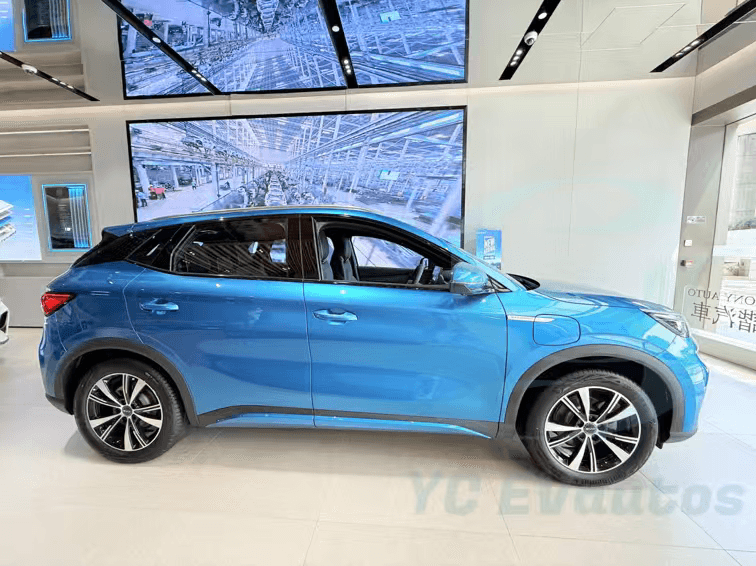
BYD Atto 3 Right Hand Drive: Buyer Guide & Checklist
Where the BYD Atto 3 right hand drive is sold, how to spot RHD vs LHD from photos and docs, and a practical buyer checklist.
BYD Editorial
Buying Guides
If you're seeing a BYD Atto 3 listing labeled RHD (right-hand drive), you're not alone. The Atto 3 is sold globally, and in many countries the steering wheel sits on the right—which can be perfectly normal in those markets. This guide is built for the consideration stage: you're comparing options, validating a specific listing, and trying to avoid expensive surprises.
Quick decision matrix: should you even consider an Atto 3 RHD?
| If this is you… | RHD is usually… | Why |
|---|---|---|
| You plan to keep the car in a left-hand-drive country | A "proceed with caution" choice | Daily ergonomics + resale + paperwork can be harder than expected |
| You're buying from a right-hand-drive market (or moving to one) | Normal | It's the standard configuration there |
| You're comparing listings and suspect one is "odd" or misrepresented | Useful to verify | "RHD" can be a legitimate market spec—or a listing mistake |
| You want the easiest ownership path (service, warranty clarity, resale) | Usually avoid | Market support is typically strongest for locally sold specs |
Pro Tip: Treat "RHD" as a verification task, not a feature. The goal is to confirm the car's market spec and whether that spec fits your real life.
Where the BYD Atto 3 is commonly sold in right-hand-drive form
A simple rule helps: countries that drive on the left usually sell right-hand-drive vehicles. For the Atto 3, RHD versions are commonly associated with markets like Australia and the UK, and several Southeast Asian right-hand-drive markets where BYD has been active internationally. Important nuance: this isn't a complete list, and availability changes fast. Use this section as a sanity check:
- If a seller claims the car is an "official local spec," but it's RHD in a left-hand-drive country, you should ask more questions.
- If it's clearly imported from a right-hand-drive market, RHD may be expected.
Atto 3 vs Yuan Plus: why the same car shows up under different names
You'll also see listings called BYD Yuan Plus. In most cases, that's the same model marketed under a different name. Wikipedia's model overview notes that the BYD Atto 3 is marketed as the Yuan Plus in China. Australia's EV outlet The Driven also covered BYD's decision to rename the model for export markets, including early right-hand-drive images. What this means when you're shopping:
- Don't assume "Yuan Plus" vs "Atto 3" means different generations.
- Do assume the market spec may differ (features, software, charging standards, trim names).
How to spot a BYD Atto 3 right hand drive car from listing photos
If you've ever wondered how to tell if a car is right hand drive, the Atto 3 is straightforward: you're looking for the driver position and the "mirrored" control layout.
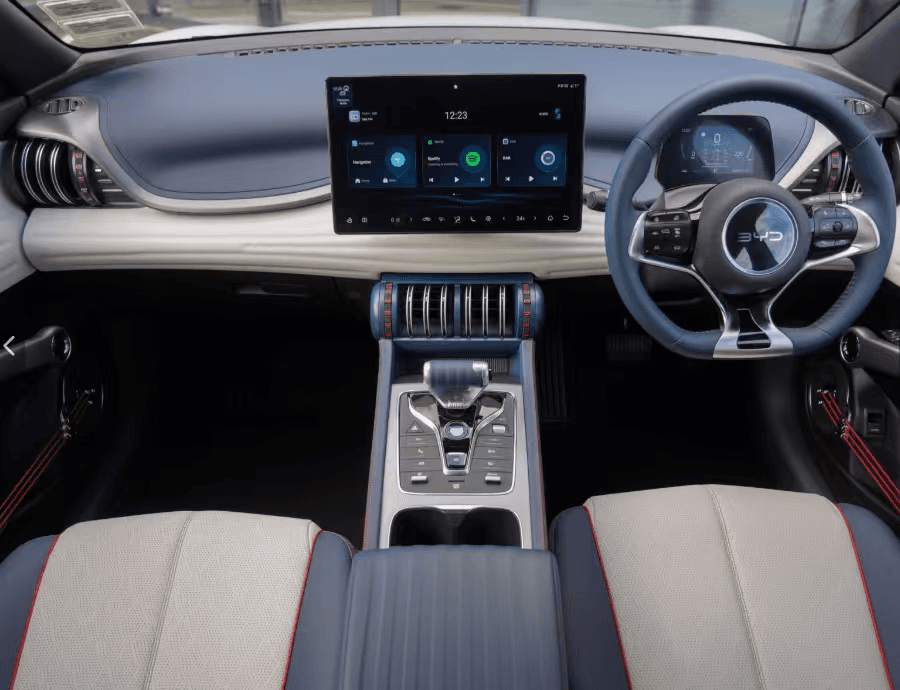
If you only do one thing, do this:
1) Steering wheel and instrument cluster
- RHD: steering wheel is on the right; the driver's display is centered behind it.
- LHD: steering wheel is on the left.
Sounds obvious—but it catches a lot of listing errors.
2) Driver's door switch panel
In a clear interior shot, the window and mirror switches should appear on the right-side front door for RHD.
3) "Mirrored" interior cues
These aren't definitive on their own, but they support the picture:
- The glovebox is typically on the passenger side (left side in an RHD car).
- Driver-assist and steering-wheel controls often look "mirrored" compared with LHD review videos you may have watched.
Warning
Don't rely on exterior photos to determine RHD vs LHD. You need at least one clean interior shot.
How to verify RHD from documentation (the buyer-proof method)
Photos can be misleading (old photos, stock images, edited listings). Documentation is harder to fake. Here's what to request from the seller:
A) The market spec sheet or brochure
Ask for the exact brochure/spec sheet for the vehicle's market. Even BYD's global materials acknowledge that features differ by market—for example, BYD notes that some infotainment apps are "available only in limited markets" on regional Atto 3 product information.
B) The owner's manual version
Look for manuals that explicitly specify left-hand or right-hand drive, or are published by the importer for that market. If you want a starting point for general reference while you shop, Electric Car BYD has a vehicle owner's manual hub you can browse.
C) Registration/import paperwork
If it's already imported, ask for whatever document indicates:
- country of origin
- compliance status (where applicable)
- VIN and registration details
If the seller can't provide basic documentation, that's not "normal friction"—it's a red flag.
The practical implications of owning an RHD car in a left-hand-drive country
Even if you love the car, RHD changes day-to-day life. Here are the big ones buyers tend to underestimate.
Driving ergonomics and safety
- Overtaking visibility can be worse on two-lane roads because you sit farther from the center line.
- Some driving maneuvers feel less natural at first (turning, lane positioning, judging curb distance).
If you'll be driving with kids in the car, this is worth taking seriously.
Tolls, parking garages, drive-throughs
In many left-hand-drive countries, toll booths and ticket machines are designed for a driver on the left. RHD can mean:
- awkward reaching
- needing a passenger
- relying more on electronic tags
Service, warranty, and parts reality
This varies by market, but the pattern is consistent:
- local dealer networks are most comfortable supporting local-market specs
- imports can be harder to service (parts sourcing, software versions, warranty recognition)
This doesn't mean "don't buy." It means: plan for friction.
Charging and software features may vary by market
Charging ports/standards and software features often depend on regional homologation. The safest approach is: verify the exact market spec sheet, and use official sources where possible.
Buyer checklist: how to evaluate a BYD Atto 3 RHD listing
Use this in order. It's designed to reduce wasted time.
Step 1 — Confirm it's truly RHD
- Clear interior photo showing steering wheel on the right
- Clear photo of the driver door switch panel (right-side)
Step 2 — Confirm the market of origin
- Seller provides the market/country the car was originally sold in
- You can cross-check the trim naming and feature list against a market brochure/spec sheet
Step 3 — Confirm documentation quality
- VIN is provided and matches paperwork
- Registration/import paperwork is available (if applicable)
- Owner's manual version aligns with the market
Step 4 — Confirm ownership practicality for your situation
- You have a plan for tolls/parking/drive-throughs (tag, passenger, or workflow)
- You have a local service plan (who will diagnose, service, source parts)
- You understand what warranty support exists (if any)
If you're still choosing: compare the Atto 3 against other BYD options
If RHD is making you question the whole purchase, zoom out for a minute. It can help to compare the Atto 3 against other BYD models that may be easier to buy/support in your market. A quick starting point:
- Browse the lineup overview on Electric Car BYD (BYD electric vehicle information).
- If you want a multi-model comparison, you can also reference this guide: Comparing BYD EV models: which one fits you?.
If you're actively shopping and want a clean, contact us for a spec-first reference page to compare against a listing, or use the BYD Atto 3 model page and match what you see in photos and documents to the market spec you're being sold.
Related Articles
Can I Charge My BYD EV at Public Charging Stations?
BYD EVs support global public charging standards. Learn simple charging steps, enjoy fast charging and global after-sales—contact us to buy.

BYD EV Window Fogging? Simple Fixes & Premium Defog System
Confused by persistent BYD EV window fogging? Check 4 easy DIY fixes, learn about BYD's smart defog system & top overseas BYD models for all weather.
